
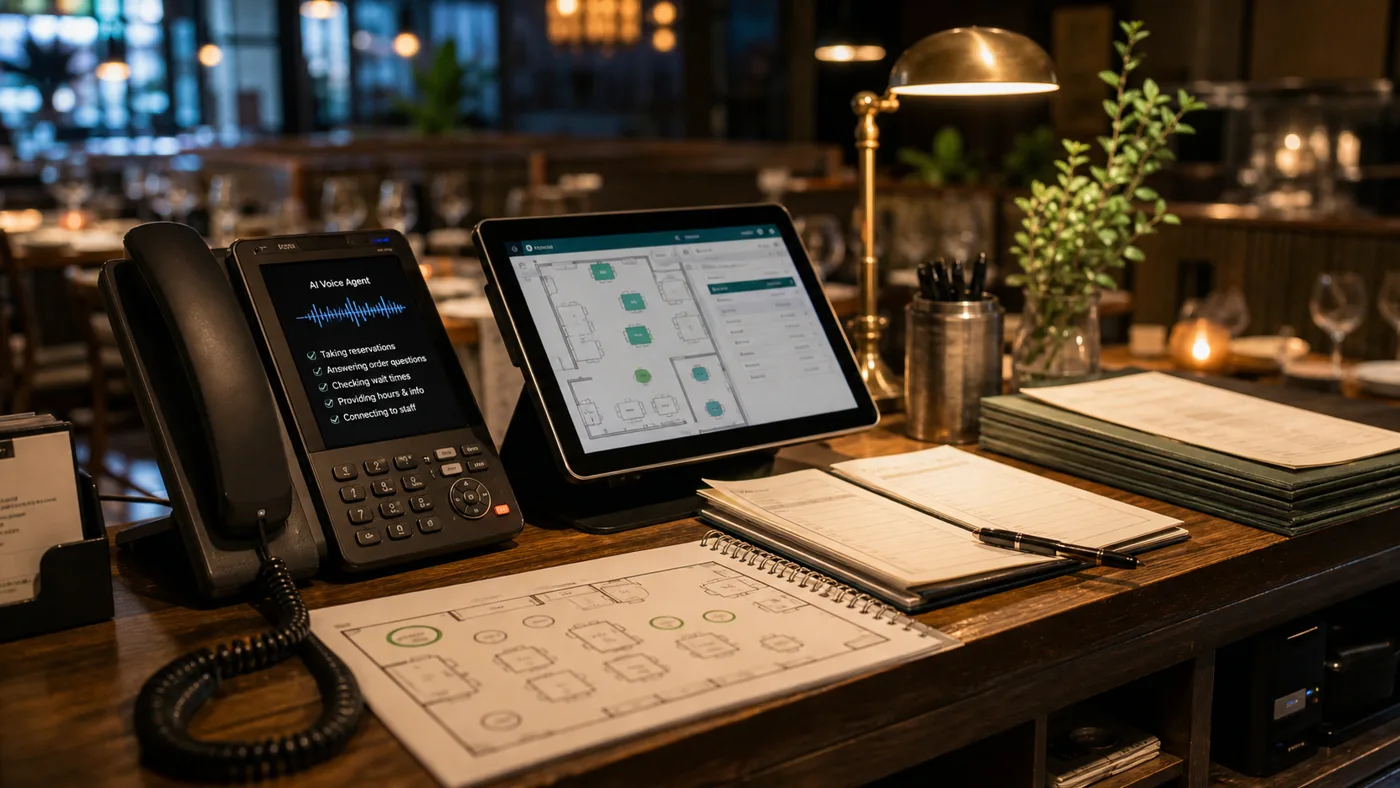
What Restaurant Buyers Need
Restaurant calls are bursty. A voice agent should handle peak-time call volume without slowing down floor staff or creating reservation mistakes.
The phone often rings when staff are least able to answer: dinner rush, lunch rush, pre-service prep, private events, and weekend peaks. The value of restaurant voice AI is not only fewer missed calls. It is cleaner reservation capture, faster guest answers, fewer repeated questions for the host stand, and better follow-up on high-value event inquiries.
Must-Have Criteria
- Reservation platform integration
- Menu and hours knowledge
- Handling for private events and large parties
- Human escalation for complaints and VIP guests
- Existing number and forwarding support
- Analytics for call volume and missed opportunities
Systems To Map
Before choosing a tool, map the systems that decide whether the call can be completed:
| System | Why it matters |
|---|---|
| Reservation platform | The agent must create, change, or route reservations without duplicate bookings. |
| Phone forwarding or existing number | The restaurant may not want to change the number guests already know. |
| Menu and policy source | Hours, allergens, substitutions, fees, private dining, and holiday rules change often. |
| Staff notification channel | Managers need event leads, complaints, VIP notes, and large-party requests quickly. |
| Analytics | Missed calls, reservation attempts, call reasons, and escalations should be reviewable. |
The buyer should know who updates each system. A voice agent can only stay accurate if the restaurant has a fast path for content changes.
Workflow Map
| Caller path | Agent should do | Staff should review |
|---|---|---|
| Standard reservation | Check availability and confirm party size, time, and contact details. | Reservation accuracy and duplicate handling. |
| Large party or event | Gather details and route to private dining or manager workflow. | Lead quality and handoff speed. |
| Menu or allergen question | Answer only from approved content and offer staff follow-up when uncertain. | Whether the agent avoided invented policy. |
| Complaint or VIP | Escalate quickly and capture context. | Whether the handoff felt respectful. |
Failure Modes To Test
Restaurant calls fail in predictable ways:
- Caller asks for a time that is unavailable.
- Caller changes party size after a slot is offered.
- Caller asks about an allergen the restaurant has not approved for automation.
- Guest wants a large party, private room, buyout, or catering request.
- Caller asks for a refund, manager, or complaint path.
- Caller says they are running late or need to modify a reservation.
- Holiday hours differ from normal hours.
- Background noise makes names and numbers hard to capture.
The agent should not guess. It should offer alternatives, route to staff, or capture a clean callback request.
Calls To Test
- Two-person reservation for tonight
- Large party request with a special occasion
- Caller asking about allergens or menu substitutions
- Guest asking for directions and parking
- Complaint that should reach a human
- Private dining or catering inquiry
Procurement Questions
- Which reservation systems are supported and how is the integration verified?
- Can the restaurant keep its existing phone number?
- How are menu items, holiday hours, and private-event policies updated?
- Can the agent distinguish normal reservations from large-party or event leads?
- How are complaints, VIP guests, allergy uncertainty, and manager requests escalated?
- Are call recordings and transcripts available for staff review?
- Can analytics show missed calls, saved reservations, escalations, and common questions?
- What happens if the reservation platform is unavailable?
Red Flags
Restaurant voice AI should not invent menu policy, quote unavailable tables, or trap frustrated guests. The agent should know when to answer, when to book, when to take a message, and when to hand off to the host stand.
Suggested Tool Shortlist
Start with restaurant-specific platforms such as Slang AI, Loman AI, and OpenTable Voice AI before comparing generic AI receptionist tools.
Use Best Restaurant Voice AI for a provider-by-provider shortlist, then use AI Phone Ordering Systems for Restaurants when phone orders, menu modifiers, POS handoff, and payment policy matter more than reservation handling.
Best First Workflow
The safest first workflow is usually standard reservation handling plus clear escalation for large parties, private dining, complaints, and allergen uncertainty. That workflow has measurable outcomes and direct staff value.
Avoid launching with every restaurant question at once. Start with reservations, hours, directions, and approved menu facts, then add event inquiries and more nuanced guest workflows after staff trust the summaries.
Launch Advice
Test during simulated peak hours before routing real dinner-rush calls. Restaurant teams should also verify how quickly menus, holiday hours, private-event policies, and reservation rules can be updated.
Start with one location and one call type if possible. Review the first 100 calls for wrong hours, missed reservation details, menu uncertainty, and guest frustration. Expand only after staff trust the reservation updates and escalation summaries.
Industry FAQs
Does restaurant voice AI need reservation-system integration?
For confirmed bookings, yes. Without verified reservation integration, the agent should capture a request or route staff follow-up instead of promising availability or creating duplicate reservations.
Which restaurant calls should escalate to a human?
Escalate complaints, VIP guests, large parties, private events, allergen uncertainty, refund requests, manager requests, and any reservation conflict the system cannot resolve confidently.