
Buyer asset
AI voice agent RFP generator
Build a vendor-ready RFP that turns broad AI phone claims into workflow scope, proof requests, compliance checks, pricing lines, demo scripts, and acceptance criteria.
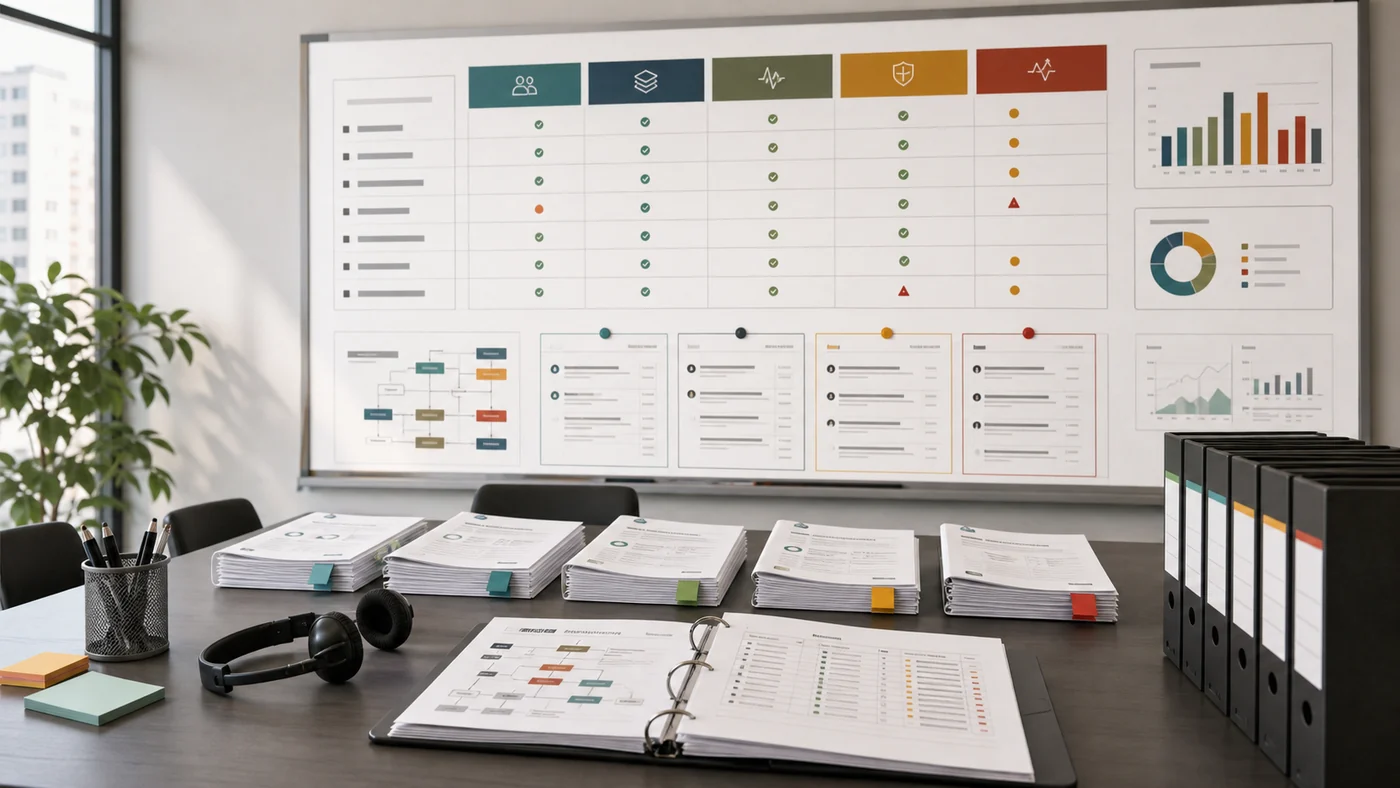
Why a voice agent RFP needs more than feature checkboxes
AI voice agent vendors often lead with natural voices, fast setup, low latency, campaign automation, and broad integration claims. Those claims are useful starting points, but a buyer still needs proof that the agent can complete the exact call workflow without creating new operational risk.
A strong RFP should define the first production workflow before it asks for a platform overview. For an appointment workflow, that means availability lookup, caller identity, booking rules, reschedule logic, confirmation messages, staff escalation, and calendar write-back. For lead qualification, it means consent, qualification criteria, CRM updates, disqualification language, duplicate handling, and follow-up ownership. The vendor should show the workflow working in a live demo with the same edge cases every other vendor receives.
What to ask vendors to prove
| RFP area | Proof request | Why it matters |
|---|---|---|
| Telephony ownership | Show whether numbers, SIP, BYOC, routing, recording, transfer, and carrier fees are native or third-party. | Phone architecture affects latency, reliability, cost, and who troubleshoots failed calls. |
| Conversation control | Demonstrate interruption handling, silence recovery, noisy callers, speech repair, and escalation triggers. | Great demo voices can still fail when callers talk over the agent or change intent mid-call. |
| Workflow completion | Provide logs for tool calls, retries, failed writes, staff transfers, completed outcomes, and post-call summaries. | The useful metric is completed work, not minutes consumed. |
| Security and privacy | Document recording controls, transcript storage, retention, redaction, data processing terms, and access permissions. | Call data can include protected, regulated, or commercially sensitive information. |
| Pricing normalization | Break out subscription, included usage, overage, voice/model usage, telephony, setup, integrations, seats, support, and fallback. | Headline per-minute or monthly plans rarely show the whole operating cost. |
Use the same demo script for every vendor
Send each vendor the same call pack: one clean success case, one caller interruption, one unavailable appointment or unsupported request, one sensitive escalation, one integration failure, and one pricing or policy question. Ask for the transcript, event log, transfer record, tool-call trace, and outcome label after each call.
This makes the comparison fair. It also exposes the difference between a vendor that has a polished voice layer and a vendor that can run the operating workflow with monitoring, retries, human fallback, and clear buyer-owned controls.
Related buyer assets
- AI Voice Agent Evaluation Scorecard
- AI Voice Agent Call Test Script
- AI Receptionist Pricing Calculator
- Retell AI vs Vapi
- Vapi vs LiveKit vs Pipecat
- Voice AI Infrastructure Stack
- Restaurant Voice AI
RFP FAQs
What should an AI voice agent RFP include?
An AI voice agent RFP should define the first call workflow, call direction, telephony requirements, integrations, compliance constraints, fallback rules, demo evidence, pricing normalization, and acceptance criteria.
Should the RFP ask for latency numbers?
Yes. Ask vendors to provide a live-call latency budget, including telephony, speech recognition, LLM reasoning, tool calls, text-to-speech, barge-in handling, and transfer timing.
How do I compare AI voice agent quotes?
Normalize pricing by monthly platform fees, included minutes, overage, carrier or SIP fees, voice and model usage, setup, integration work, human fallback, and cost per completed workflow.
Do I need separate requirements for outbound calls?
Yes. Outbound AI calling needs consent source, TCPA review, opt-out handling, do-not-call suppression, call recording rules, campaign limits, and human escalation controls.